Threat actors leverage SantaStealer for stealer logs generation, account takeover campaigns, crypto theft, and large-scale data breach operations across darkweb ecosystems
What is SantaStealer?
SantaStealer, a newly identified Malware-as-a-Service (MaaS) infostealer, is being actively marketed within cybercriminal communities as a modular credential theft platform capable of harvesting browser credentials, session cookies, crypto wallet data, VPN configurations, FTP credentials, gaming accounts, and email client sessions. The malware also integrates a cryptocurrency clipper capable of silently hijacking copied wallet addresses during transactions, enabling direct crypto theft even when credential harvesting operations yield limited results. Researchers from TW360 Threat Intelligence assess SantaStealer as part of the growing industrialization of the infostealer ecosystem, where threat actors monetize stolen credentials, stealer logs, authentication cookies, and financial data through darkweb marketplaces, Telegram channels, and initial access broker networks.
SantaStealer Login Portal and Affiliate Access
The operation exposes a branded affiliate-facing login panel designed for controlled onboarding and malware distribution management. Unlike open-access commodity malware services, SantaStealer appears to rely on account-key provisioning rather than self-registration, indicating a more curated affiliate model commonly observed among mature cybercrime operations. The onboarding workflow reflects a commercially structured Malware-as-a-Service infrastructure focused on scalability, affiliate management, and operational control. The branding, clean interface, and simplified access process further demonstrate how modern cybercriminal operations increasingly mirror legitimate SaaS business models.
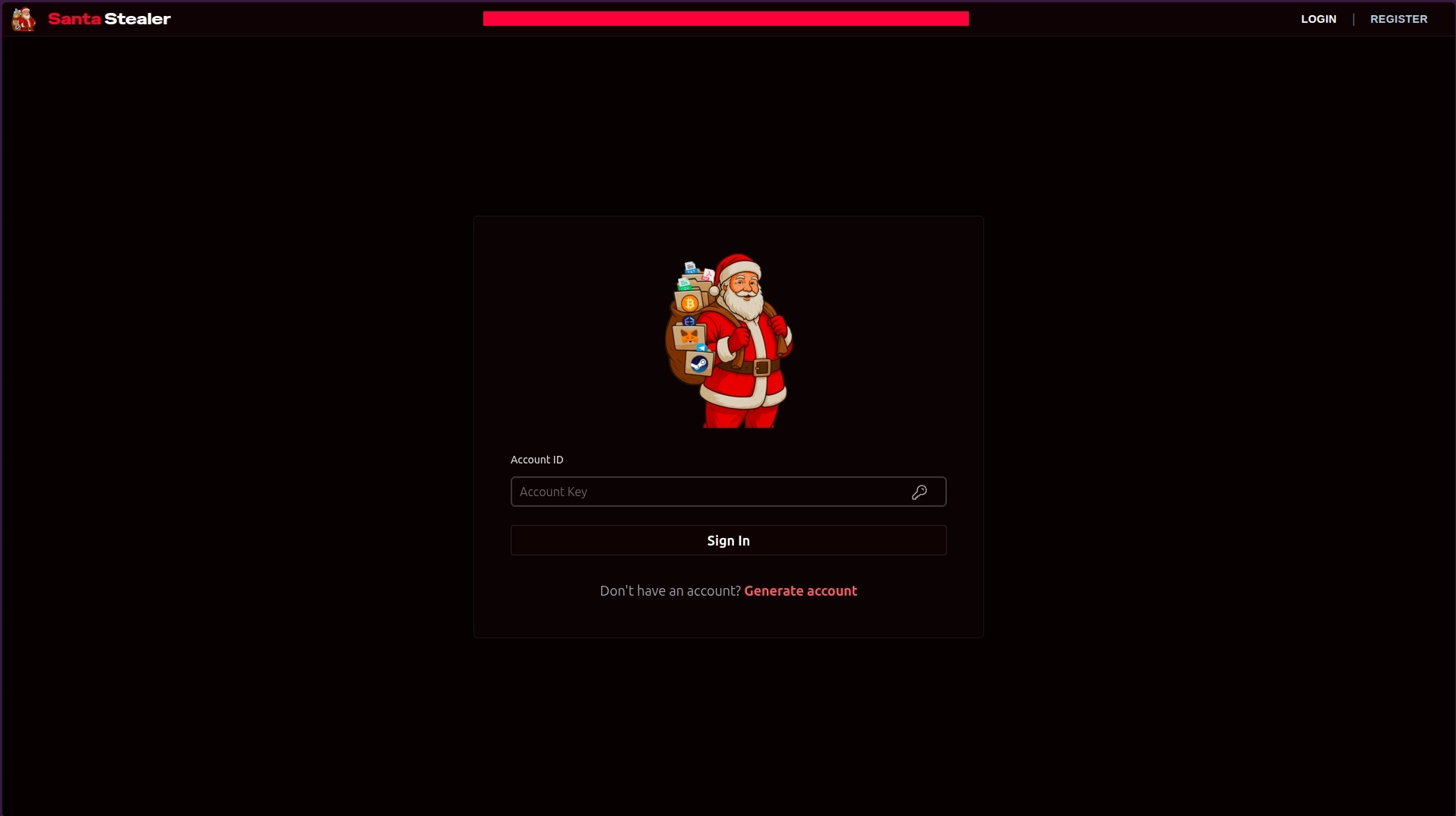
Figure 1 — SantaStealer login and affiliate access portal.
Modular Stealer Builder Enables Targeted Data Theft
Once authenticated, affiliates gain access to the SantaStealer build configuration dashboard, where individual modules can be selectively enabled or disabled depending on operational requirements. The malware builder supports harvesting browser credentials, saved passwords, session cookies, crypto wallet files, FTP credentials, VPN configurations, gaming sessions, and email client data. Observed application targets include FileZilla, Atomic Wallet, Electrum Wallet, Cake Wallet, Ledger Live, Steam, Microsoft Outlook, Thunderbird, and WinSCP, indicating that the malware is specifically engineered to target both consumer and enterprise authentication artifacts.
The panel explicitly references %APPDATA% and %LOCALAPPDATA% paths used for credential extraction and session harvesting. Additional functionality exposed in the builder includes Telegram Bot API exfiltration, fake error popup generation, configurable execution delays, campaign watermarking, and custom application path targeting. The “Application Data Collector” module appears specifically designed to aggregate authentication artifacts across browsers, VPN clients, FTP software, gaming platforms, and cryptocurrency applications within a single execution cycle, increasing the likelihood of successful account takeover and credential abuse operations.
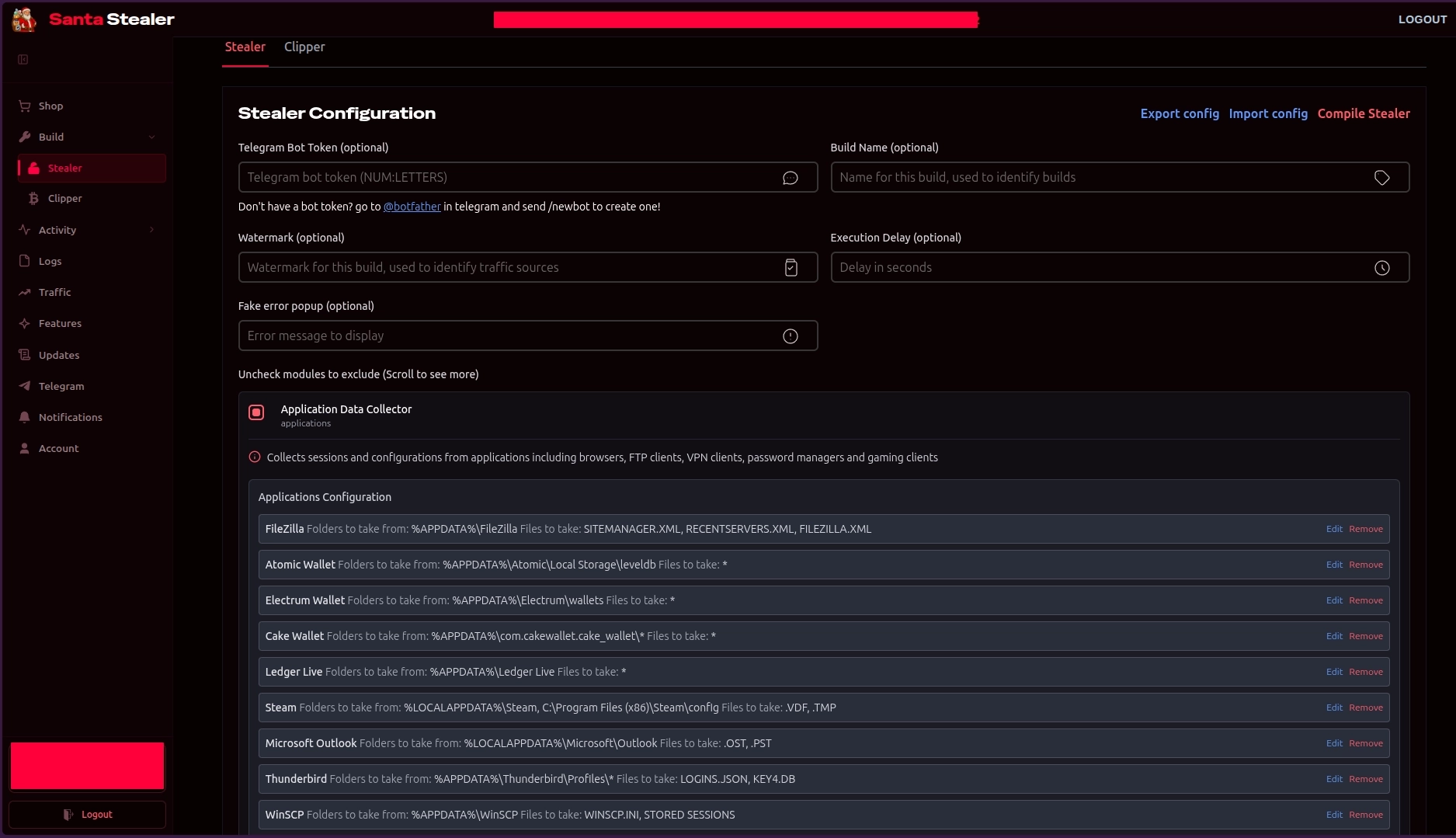
Figure 2 — SantaStealer configuration dashboard exposing targeted applications, Telegram exfiltration, and modular credential harvesting.
Crypto Clipper Targets Cryptocurrency Transactions
SantaStealer also includes a separately compiled cryptocurrency clipper module designed for wallet hijacking and transaction interception. The clipper continuously monitors clipboard activity and automatically replaces copied cryptocurrency wallet addresses with attacker-controlled alternatives before transactions are completed. Supported blockchain ecosystems include Bitcoin, Ethereum, Monero, Litecoin, Solana, Ripple, Dogecoin, and TRON, demonstrating broad targeting across mainstream cryptocurrency networks.
Researchers observed that the clipper module is encrypted independently before being bundled into the final payload through the loader and dropper functionality. Notably, panel documentation indicates that if affiliates fail to configure replacement wallet addresses, default operator-controlled wallets may automatically be used instead. This mechanism potentially creates an additional passive monetization stream for the malware operators themselves, allowing them to profit even from poorly configured affiliate campaigns.
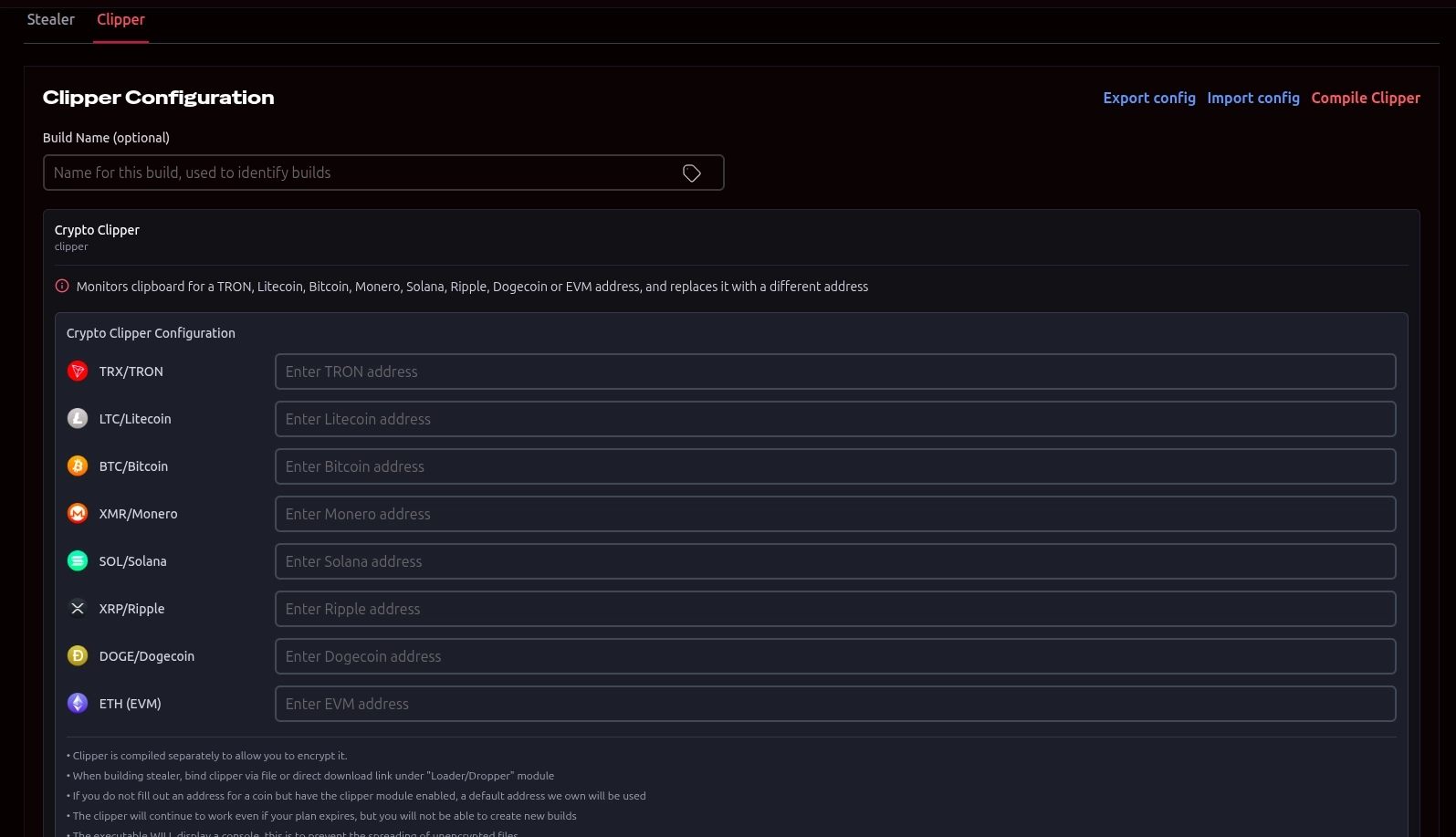
Figure 3 — SantaStealer crypto clipper configuration panel supporting multiple cryptocurrency ecosystems.
Feature Matrix Reveals Technical Capabilities
The SantaStealer feature comparison panel provides additional insight into the malware’s technical capabilities and operational design. The operator advertises fully silent execution, no visible console windows, minimal CPU usage, Windows 7, 10, and 11 compatibility, heuristic file discovery, crypto keyword scanning, modular architecture across 14 modules, and optional CIS region blocking functionality. The malware claims asynchronous data collection completing within approximately five seconds of execution, producing uncompressed stealer logs ranging between 1 MB and 10 MB.
The optional CIS filtering functionality is particularly notable because it mirrors operational security patterns frequently associated with Russian-speaking cybercriminal groups attempting to avoid regional law enforcement attention. Premium and Lifetime subscription tiers additionally unlock heuristic crypto-related file targeting and recursive file discovery functionality, significantly increasing the malware’s ability to identify sensitive financial and authentication-related data across infected systems.
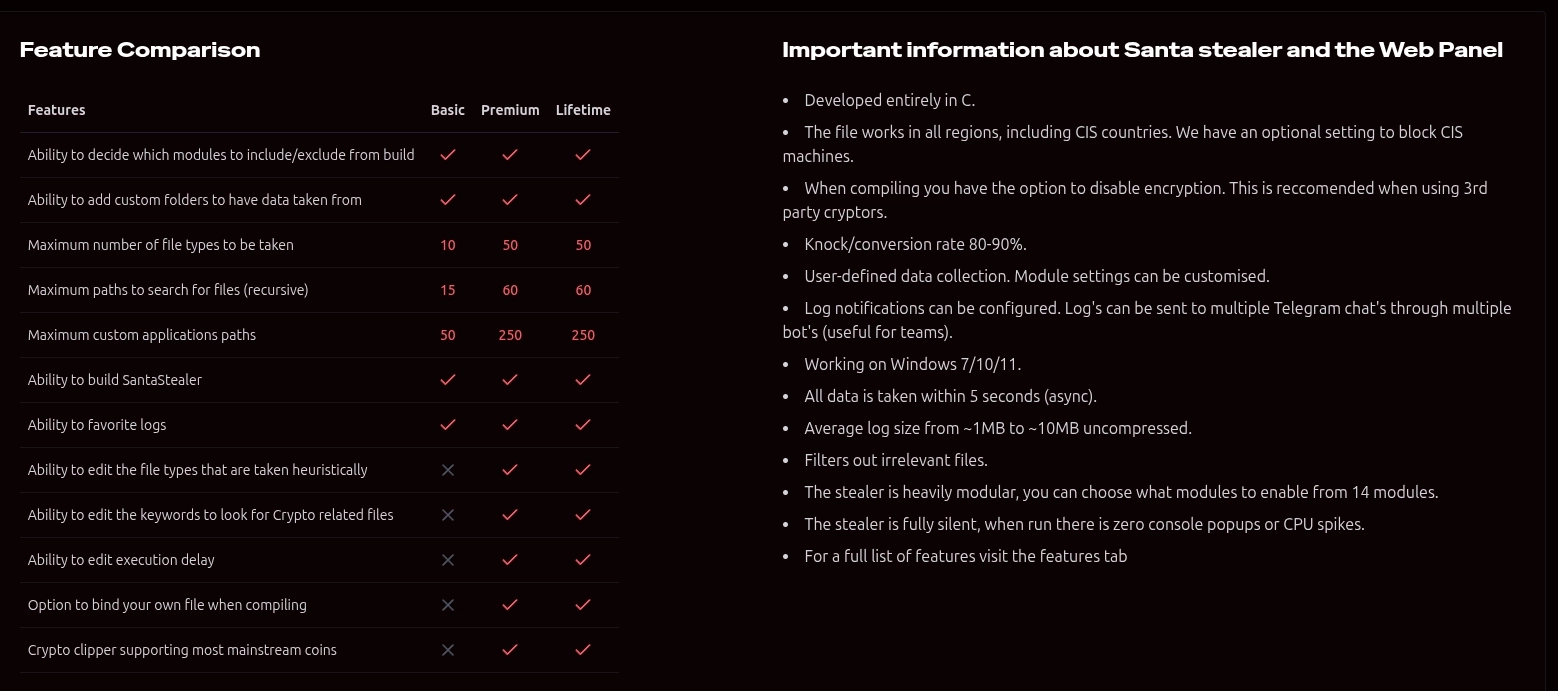
Figure 4 — SantaStealer feature matrix highlighting stealth execution, modularity, CIS filtering, and asynchronous data collection capabilities.
Subscription Pricing and Criminal Monetization
SantaStealer is monetized using a tiered subscription structure that closely resembles legitimate commercial software licensing models. The Basic plan is priced at $200 per month, while the Premium plan costs $300 per month and unlocks additional functionality including heuristic scanning, expanded targeting capabilities, and cryptocurrency clipper support. A Lifetime plan is also advertised for a one-time payment of $1,000, positioning the malware as a long-term operational investment for threat actors conducting persistent credential theft and financial fraud campaigns.
Researchers assess that SantaStealer operators likely generate revenue through two separate monetization channels simultaneously. The first comes from affiliate subscription payments, while the second likely originates from passive cryptocurrency theft through clipper misconfigurations where default operator wallet addresses remain active. This architecture incentivizes widespread deployment regardless of affiliate sophistication and reflects the broader commercialization trend currently dominating the Malware-as-a-Service ecosystem.
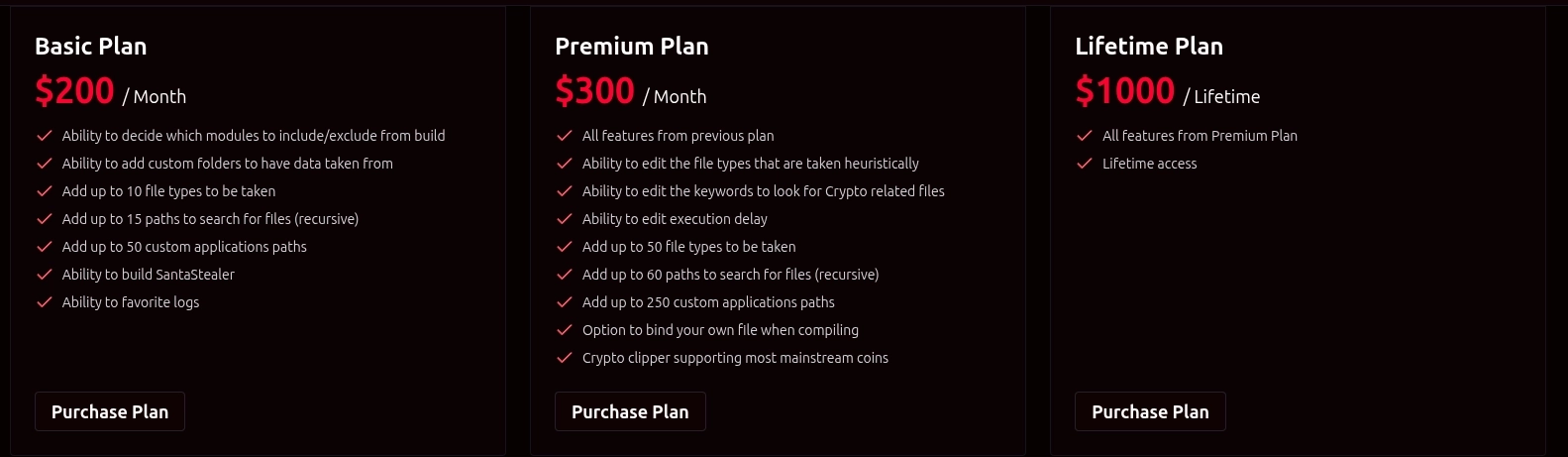
Figure 5 — SantaStealer subscription pricing structure and feature segmentation.
Threat Intelligence Assessment
SantaStealer represents a growing category of advanced infostealers engineered for scalable credential theft, session hijacking, account takeover, and financial fraud operations. The malware’s combination of browser credential theft, session cookie harvesting, Telegram-based exfiltration, crypto wallet extraction, clipboard hijacking, modular payload generation, and stealer log creation positions it as a significant threat for organizations facing phishing campaigns, ransomware intrusions, business email compromise (BEC), and darkweb credential exposure.
The increasing availability of MaaS infostealers significantly lowers the barrier to entry for cybercriminal affiliates, enabling even low-skilled threat actors to conduct sophisticated credential theft and data breach operations at scale. The commercialization of stealer malware also increases the availability of stolen authentication artifacts across darkweb ecosystems, directly contributing to credential stuffing attacks, enterprise account takeover incidents, and unauthorized access operations targeting both individuals and organizations.
Indicators of Compromise (IOCs)
SHA-256:
055d777c3d38269f07d454f07abc985dfa52493b669cd3cc687304a0a6425122

Infrastructure:
Telegram Bot API
Operator-Controlled C2 Panel

VirusTotal:
<https://www.virustotal.com/gui/file/055d777c3d38269f07d454f07abc985dfa52493b669cd3cc687304a0a6425122/>
Detection and Mitigation Recommendations
Organizations should immediately block the identified SHA-256 hash across endpoints, email gateways, proxies, and SIEM platforms. SOC teams should monitor for suspicious connections to api.telegram.org, unusual clipboard activity, and unauthorized access to browser credential stores, VPN configurations, FTP clients, email applications, and crypto wallet files.
Since SantaStealer steals passwords, session cookies, and authentication data, exposed credentials should be reset immediately and all active sessions should be revoked to prevent account takeover. Organizations should also enforce phishing-resistant MFA such as FIDO2 or WebAuthn security keys, as stolen session cookies can bypass traditional MFA protections.
Darkweb Monitoring and Exposure Intelligence
Infostealer malware like SantaStealer often leads to stolen credentials and stealer logs being sold on darkweb forums and Telegram channels, increasing the risk of ransomware, account takeover, and data breach incidents.
ThreatWatch360’s BreachEye Darkweb Monitoring Platform helps CISO, SOC, and IT teams identify exposed employee credentials, stealer log infections, leaked corporate accounts, and darkweb data breach activity in real time. Early detection allows organizations to quickly reset compromised accounts, reduce exposure risk, and prevent attackers from gaining unauthorized access.