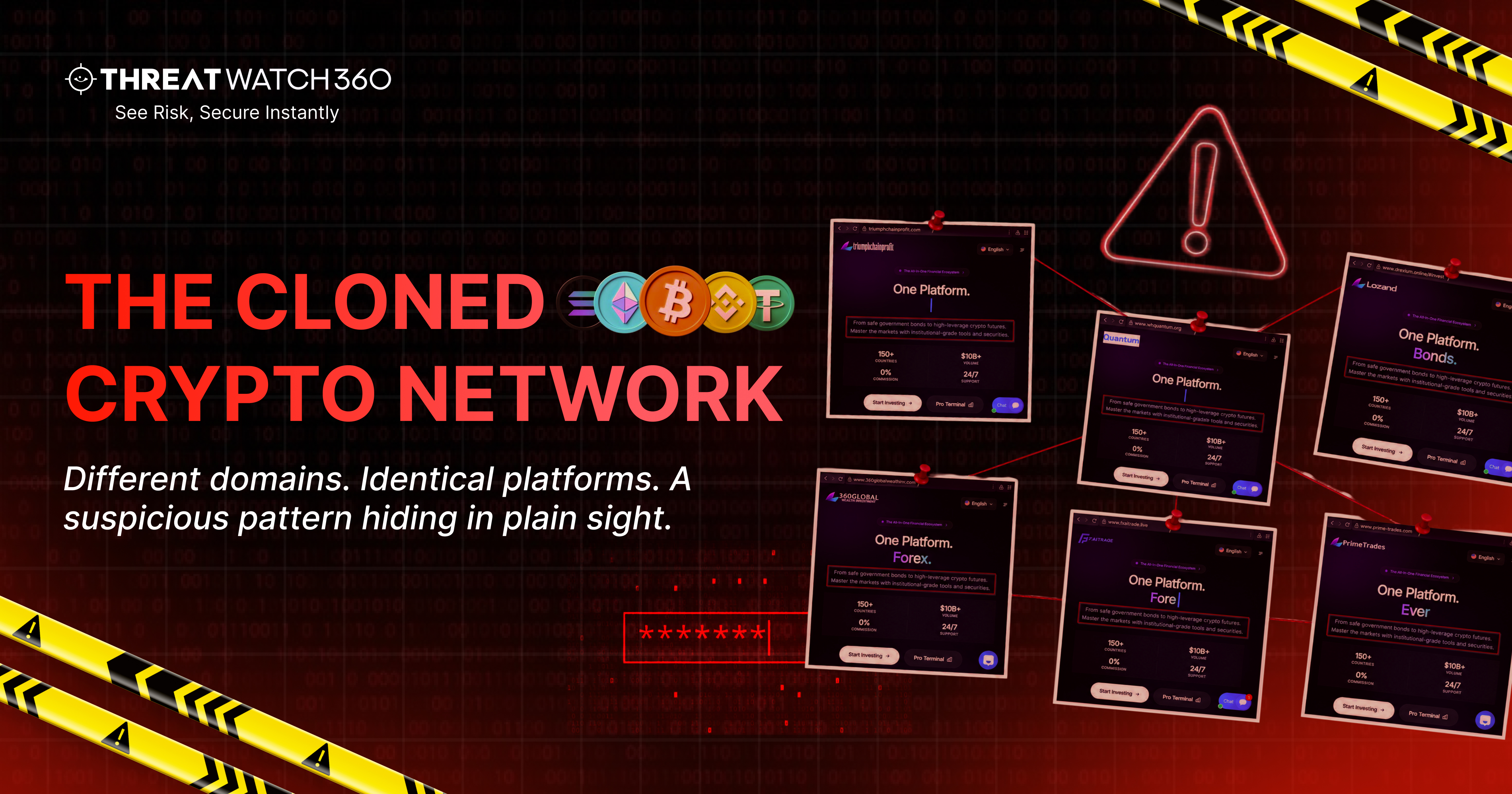
Discover how cybercriminals use lookalike websites, fake crypto investment platforms, and deceptive domains to steal funds—and learn the warning signs to protect yourself.
What Is This Crypto Scam Network?
The network is a cluster of investment-themed websites that advertise cryptocurrency trading, wealth management, and financial investment services under different brand names—while running on the same cloned website template.
Cybercriminals use these lookalike websites, fake crypto investment platforms, and deceptive domains to steal funds from unsuspecting investors. Each site presents itself as an independent financial platform, but analysis suggests otherwise: identical layouts, marketing content, user workflows, and financial-service branding appear across every domain in the cluster.
Initial Discovery
The investigation began after several suspicious investment-themed websites were identified advertising cryptocurrency trading and wealth management services.
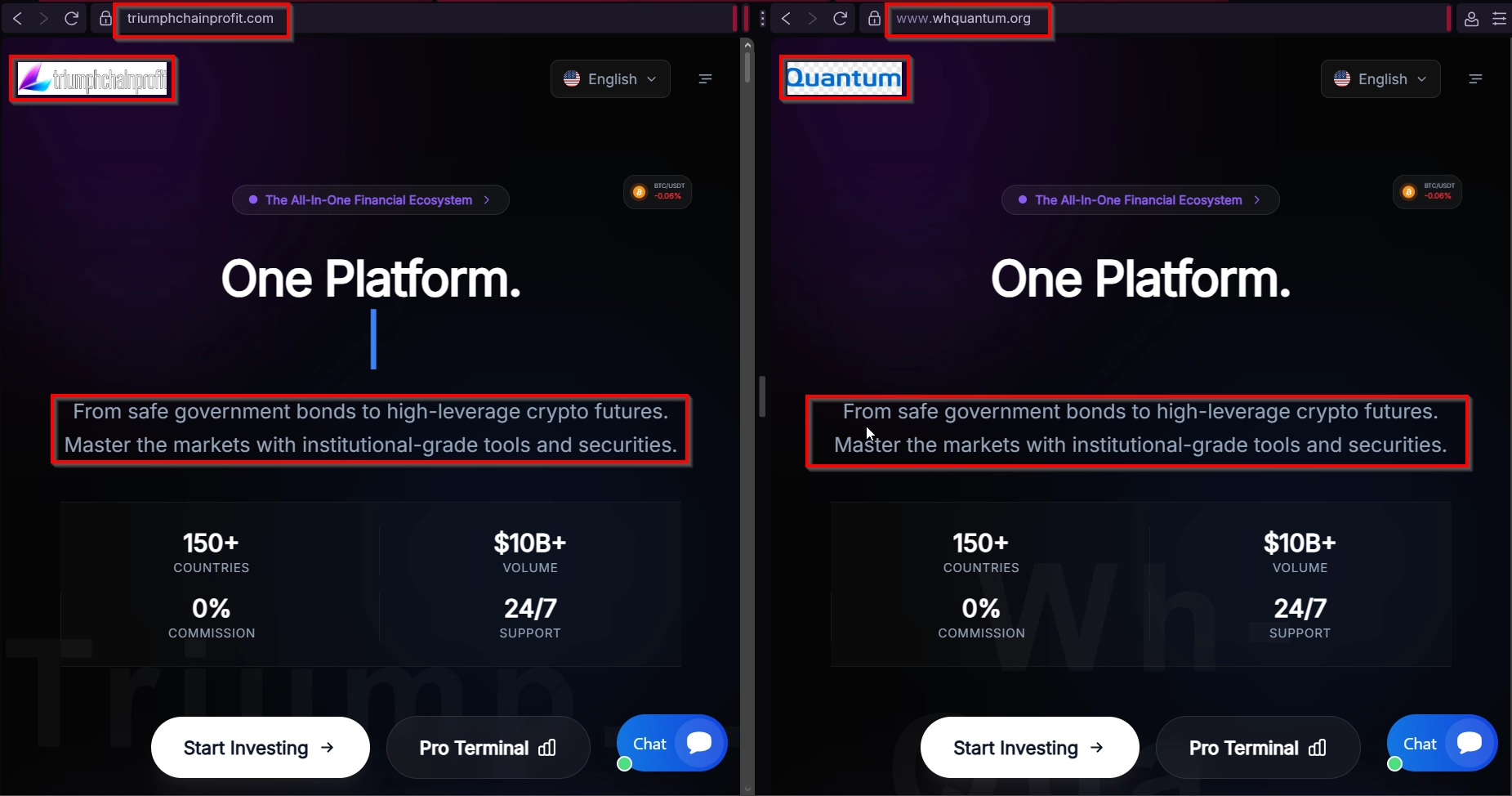
A comparison of hxxp://whquantum[.]org and hxxp://fxaitrade[.]live revealed identical content blocks, matching statistics, and nearly identical page structures. Although the branding differed, the underlying presentation remained the same.
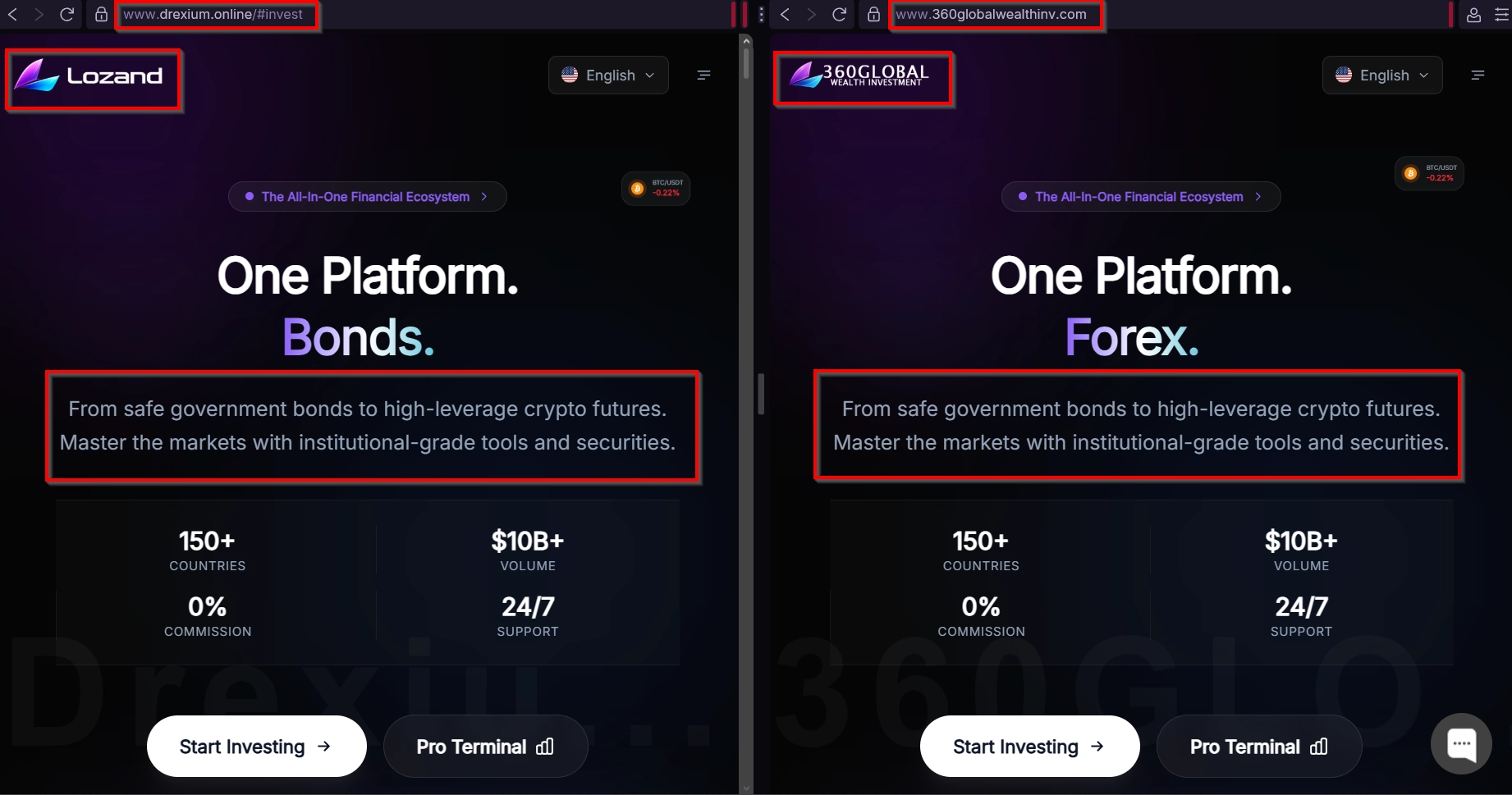
This pattern is commonly observed when operators deploy cloned websites across multiple domains to increase reach while maintaining a consistent platform design.
The Attack: How Victims Lose Money
Cloned investment platforms like these follow a familiar fraud playbook. Victims are lured in through social media ads, unsolicited “investment advisor” messages, or search results promising high returns.
Once on the site, a polished interface and impressive statistics build trust. Victims deposit funds—typically in cryptocurrency—which go straight to attacker-controlled wallets. Fake dashboards then display fabricated profits to encourage larger deposits.
When victims attempt to withdraw, they are hit with invented fees and “taxes.” Eventually, the brand disappears and a new clone takes its place. No malware is needed; the website itself is the weapon.
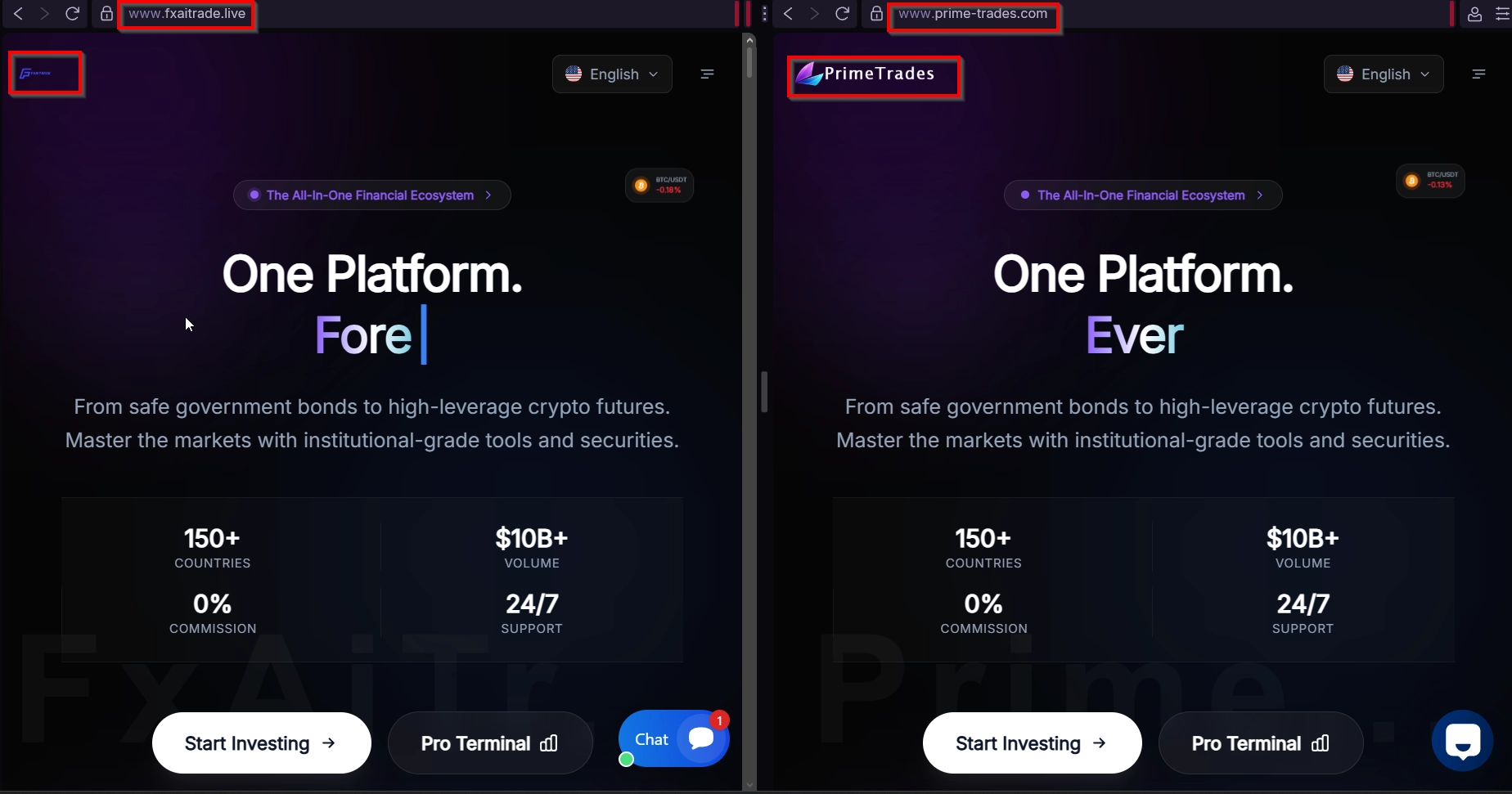
Only superficial branding changes were observed.
This level of similarity strongly suggests a shared source template or coordinated website deployment strategy.
Domain Cluster Analysis
Further analysis identified additional domains showing the same characteristics. These domains are not listed here pending further investigation and takedown action.
Each website used the same visual framework, changing only the logo and domain name. This pattern is common when operators deploy cloned sites across multiple domains to expand reach while maintaining a consistent platform design.
Website Cloning and Content Reuse
A side-by-side comparison showed extensive content reuse. The sites shared identical marketing slogans, matching platform statistics, similar navigation structures, reused visual assets, and equivalent investment-focused messaging.
Only superficial branding differences were observed. This level of similarity strongly suggests a shared source template or a coordinated website deployment strategy.
Infrastructure and Operational Patterns
One notable finding was the repeated use of identical marketing text across multiple domains. The phrase, "From safe government bonds to high-leverage crypto futures. Master the markets with institutional-grade tools and securities," appeared unchanged on several sites, indicating content reuse and a shared website framework.
Additionally, fabricated marketing claims displayed on the sites — such as "150+ Countries," "$10B+ Volume," "24/7 Support" and "0% Commission" — were consistently replicated across the domains. These are unverified figures published by the scam platforms themselves, and their identical reuse provides strong evidence of website cloning and a potentially coordinated network of investment platforms.api
Threat Intelligence Assessment
Domain-age analysis identified hxxp://fxaitrade[.]live as the earliest observed domain among the investigated websites. Later domains showed nearly identical content and design characteristics.
While direct attribution was not possible, the findings suggest shared website templates, coordinated branding strategies, repeated content deployment, and potentially common operators.
The observed patterns are consistent with a cluster of related investment websites rather than independent financial organizations.
Indicators of Concern
Domains:
hxxp://fxaitrade[.]livehxxp://whquantum[.]org
Additional related domains identified during the investigation have been withheld while monitoring and takedown efforts are in progress.
Behavioral indicators:
The investigated domains shared nearly identical website layouts, design structures, and user workflows, despite being presented as separate investment platforms.
Multiple domains reused the same marketing content, visual elements, platform statistics, and financial-service branding. The repeated use of identical messaging, metrics, and investment-related terminology provides strong evidence of website cloning and coordinated deployment.
Detection and Mitigation Recommendations
- Verify before you invest: Confirm the platform is legitimate, review the domain’s history, and verify any regulatory registration.
- Research the platform: Read independent reviews and validate the company’s details before investing.
- Monitor suspicious domains: Security teams should watch for newly registered domains using similar templates, branding, or content.
- Check the domain on VirusTotal: Search the domain in VirusTotal to review detections, associated infrastructure, historical resolutions, and other indicators of suspicious activity.
Conclusion
This investigation uncovered a cluster of investment-themed websites with highly similar layouts, messaging, and operational characteristics. The evidence indicates extensive content reuse and website cloning across multiple domains.
While definitive attribution remains unavailable, the observed similarities point to a coordinated deployment strategy that warrants continued monitoring and investigation.
*ThreatWatch360 helps organizations defend against digital threats through Brand Protection, Darkweb Monitoring, Anti-Phishing, Anti-Rogue, Takedown, Domain Monitoring and Social Media Monitoring services. By continuously identifying brand abuse and impersonation activity, organizations can better protect customers and online presence.*